درباره علم گاه شناسی درخت برگرفته از دانشگاه ماساچوست
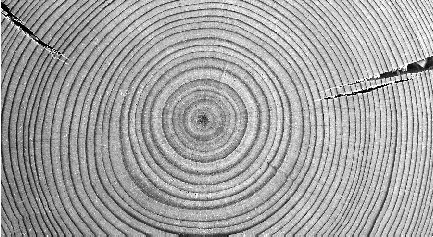
Dendrochronology is the study and comparison of tree ring growths, which can provide very accurate dates about the wood itself or artifacts found in close proximity to it. Clark Wissler of the American Museum of Natural History first recognized the potential for using tree rings as a dating method. He worked with A. E. Douglass now considered the father of dendrochronology at the University of Arizona, on Pueblo Bonito, a pre-historic Native American settlement in New Mexico.
Dendroarchaeology is the use of tree rings to date when timber has been transported, processed, felled or used in construction. Rings are made of xylem. Pith is found at the center of the tree stem followed by the xylem, which makes up the majority of the trees circumference. The cambium layer keeps the xylem separated from the rough bark. Each spring or summer a new layer of xylem is formed, producing the rings we can count. A tree ring is a layer of wood cells produced by a tree in one year, consisting of thin walled cells formed in the early growing season (called earlywood), and thicker walled cells that are produced later in the growing season (called latewood). The beginning of earlywood and the end of latewood forms on annual ring. In dendrochronology, these rings are then counted and compared. A departure of growth for any one year, as compared to average growth is known as a tree-ring chronology.
موضوع مطالب: آناتومی و حفاظت چوب - مقالات و مطالب به زبان انگلیسی


