A new method to obtain good anatomical slides of heterogeneous plant parts

A new method is presented to prepare anatomical slides of plant materials including a combination of soft and hard tissues, such as stems with cambial variants, arboreal monocotyledons, and tree bark. The method integrates previous techniques aimed at softening the samples and making them thereby more homogeneous, with the use of anti-tearing polystyrene foam solution. In addition, we suggest two other alternatives to protect the sections from tearing: adhesive tape and/or Mayer’s albumin adhesive, both combined with the polystyrene foam solution. This solution is cheap and easy to make by dissolving any packaging polystyrene in butyl acetate. It is applied before each section is cut on a sliding microtome and ensures that all the tissues in the section will hold together. This novel microtechnical procedure will facilitate the study of heterogeneous plant portions, as shown in some illustrated examples

A.C.F. Barbosa, M.R. Pace, L. Witovisk & V. Angyalossy

IAWA J. 31 (4): 373-383


.

گفتگو دکتر پورطهماسی با رادیو تهران در برنامه جام ارگ


utswe

این گفتگو با میزبانی دکتر مهدی زارع معاونت پژوهشی پژوهشگاه بین المللی زلزله در برنامه جام ارگ رادیو تهران و با حضور دکتر پورطهماسی  مدیریت گروه علوم و صنایع چوب و کاغذ دانشکده منابع طبیعی دانشگاه تهران به عنوان مهمان در این برنامه صورت گرفت. راجع به موضوعات متنوعی از جمله گاه شناسی درختی ( dendrochronology ) در این برنامه بحث شد که برای شنیدن کامل این برنامه می توانید فایلهای صوتی زیر را دانلود کنید...

فایل اول

فایل دوم


موضوع مطالب: نوشته های مختلف - آناتومی و حفاظت چوب


گاه‌شناسي درختي (Dendrochronology) چيست؟


به نام خدا

از كودكي به ياد داريم كه به ما آموختند با شمارش هر حلقه تيره و روشن در مقطع درختان مي‌توان سن درخت را محاسبه كرد. اين روش اگرچه در مناطق معتدله (كه در هر سال يك حلقه رويش منحصرا توليد مي‌شود) صادق بود اما بنيان اساسي گاه‌شناسي درختي را پديد آورده است.

درختان در مناطق معتدله در هر سال رويش خود يك حلقه رويشي توليد مي‌كنند و اين منجر به افزايش قطر و رويش شعاعي درخت مي‌گردد. اما اين حلقه در سالهاي سخت رويش بسيار باريك و در سالهاي خوب رويش پهن مي‌گردد. اين نوسانات رويش از سالي به سال ديگر منحني رويش هر درخت در سالهاي متمادي رويش را مي‌سازد. حال اگر درختي با قدمت زياد را پيدا نماييم مي‌توانيم منحني رويش طولاني مدت نظير 500 سال يا بيشتر را فراهم نماييم. اين منحني رويش اطلاعات ذي‌قيمتي درخصوص شرائط رويش درختان در سالهايي كه هيچ ابزار اندازه‌گيري (مثلا براي دماي محيط) وجود نداشت در اختيار ما قرار مي‌دهد. اين اطلاعات ارزشمند در واقع بيانگر اتفاقات و شرائطي است كه بر روي درختان يا براي درختان پدپد آمده است.

حال دانش گاه‌شناسي درختي تكنيك‌هايي را در اختيار دارد تا اين اطلاعات ارزشمند را از اين منحني‌هاي رويش استخراج نمايد. بر اين اساس زير مجموعه‌هاي اين دانش پديد آمده است. به عنوان نمونه اگر از اين منحني‌هاي رويش، اطلاعات تغييرات اقليم گذشته را استخراج و پيش‌بيني‌هايي براي آينده نماييم، وارد زير مجموعه اقليم‌شناسي درختي (Dendroclimatology) شده‌ايم.

اين بياني ساده از اين دانش ارزشمند بود. براي آنكه با زير مجموعه‌هاي اين دانش بيشتر آشنا شويد به نمودار پروفسور براونينگ در وبلاگ من مراجعه نماييد. (www.pourtahmasi.blogfa.com)

 نوشته شده توسط: پورطهماسي


منبع: www.dendroworkshop.blogfa.com

موضوع مطالب: آناتومی و حفاظت چوب

Effect of lignin genetic modification on wood anatomy of aspen trees

Abstracts – IAWA Journal

The directed modification of specific traits of trees through genetic engineering provides opportunities for making significant genetic improvements to wood properties in matter of years instead of extended time frames required for traditional natural selection. An attractive target of forest-tree engineering is the modification of lignin content and lignin structure. While lower lignin content improves pulping efficiency, a decrease in lignin content could affect wood characteristics that are critical for solid wood use. After one year of growth in a greenhouse, a total of forty transgenic aspen (Populus tremuloides Michx.) with reduced lignin content and increased syringyl to guaiacyl ratio were harvested and diameter growth and cell morphology were investigated using quantitative wood anatomy and fiber quality analysis techniques. Comparing genetic groups to the wild-type as the control, similar radial growth and quantitative anatomical properties were observed for the genetic group with reduced lignin content. The genetic group with increased S/G ratio had lower diameter growth, lower vessel lumen diameter, but more numerous vessels. The simultaneous change in lignin content and lignin structure had no effect on radial growth but had the most severe effect on cell morphology. The two genetic lines within this genetic group gave inconsistent results.

B. Horvath, I. Peszlen, P. Peralta, B. Kasal & L. Li


IAWA J. 31 (1): 29-38


درباره علم گاه شناسی درخت برگرفته از دانشگاه ماساچوست


utswe


Dendrochronology is the study and comparison of tree ring growths, which can provide very accurate dates about the wood itself or artifacts found in close proximity to it. Clark Wissler of the American Museum of Natural History first recognized the potential for using tree rings as a dating method. He worked with A. E. Douglass now considered the father of dendrochronology at the University of Arizona, on Pueblo Bonito, a pre-historic Native American settlement in New Mexico.

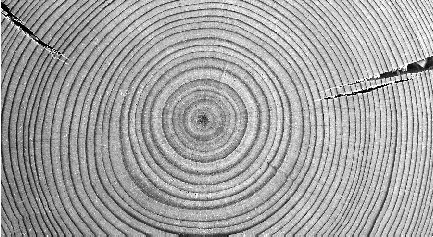
Dendroarchaeology is the use of tree rings to date when timber has been transported, processed, felled or used in construction. Rings are made of xylem. Pith is found at the center of the tree stem followed by the xylem, which makes up the majority of the trees circumference. The cambium layer keeps the xylem separated from the rough bark. Each spring or summer a new layer of xylem is formed, producing the rings we can count. A tree ring is a layer of wood cells produced by a tree in one year, consisting of thin walled cells formed in the early growing season (called earlywood), and thicker walled cells that are produced later in the growing season (called latewood). The beginning of earlywood and the end of latewood forms on annual ring. In dendrochronology, these rings are then counted and compared. A departure of growth for any one year, as compared to average growth is known as a tree-ring chronology.


متن کامل 

 موضوع مطالب: آناتومی و حفاظت چوب - مقالات و مطالب به زبان انگلیسی

ادامه نوشته

Afzelia spp. (Afzelia, doussié)

,Nomenclature etc. CAESALPINIACEAE. Afzelia africana Smith ex Pers., A. bella Harms, A. bipindensis Harms, A. pachyloba Harms, A. quanzensis Welw. Trade and local names: Afzelia (D, GB, NL), doussié, doussié rouge (CAM, F), apa (WAN), chamfuta (MOC), lingue (CI, F), ovala (ANG), azodau (CI).

Tree. Geographic distribution: tropical Africa (A. quanzensis East Africa, remaining species West Africa).

General. Growth ring boundaries indistinct or absent, growthring limits macroscopically visible, mostly demarcated by marginal parenchyma bands. Heartwood basically brown to red, without streaks. Sapwood colour distinct from heartwood colour. Basic specific gravity 0.7–0.78–0.88 g/cm³. Conspicuous interlocked grain.

Vessels. Wood diffuse-porous. Vessels arranged in no specific pattern, in multiples, commonly short (2–3 vessels) radial rows. Average tangential vessel diameter 100–180–270 µm. Perforation plates simple. Intervessel pits alternate, average diameter (vertical) 6–8 µm, vestured. Vessel-ray pits with distinct borders, similar to intervessel pits. Helical thickenings absent. Tyloses in vessels absent. Other deposits in heartwood vessels present, yellowish to brownish.

Tracheids and fibres. Fibres of medium wall thickness. Fibre pits mainly restricted to radial walls or common in both radial and tangential walls, simple to minutely bordered. Fibres non-septate.

Axial parenchyma. Axial parenchyma banded. Axial parenchyma bands marginal (or seemingly marginal), fine, up to three cells wide. Marginal parenchyma bands very fine, not always continuous. Axial parenchyma paratracheal. Paratracheal axial parenchyma aliform to confluent. Aliform parenchyma lozenge. Axial parenchyma as strands. Average number of cells per axial parenchyma strand 2–6.

Rays. Rays 5–8 per tangential mm, multiseriate, also if only few, (1–)2–3(–4) cells wide. Rays composed of a single cell type. Homocellular ray cells procumbent.

Storied structures. Storied structure present (rarely) or absent, all rays storied, axial parenchyma not storied.

Secretory structures. Intercellular canals absent.

Mineral inclusions. Crystals present, prismatic, located in axial parenchyma cells. Crystal-containing axial parenchyma cells chambered. Number of crystals per cell or chamber one. Silica not observed.

Physical and chemical tests. Heartwood yellow fluorescent (except A. bipindensis).

Miscellaneous. • Wood surface. Afzelia bipindensis. • Transverse section. Afzelia africana. • Tangential section. Afzelia africana. • Radial section. Afzelia africana.

'Commercial timbers: descriptions, illustrations, identification, and information retrieval.' In English, French, German, and Spanish. Version: 4th May 2000. http://biodiversity.uno.edu/delta

.

Acacia mangium Willd. (akasia, mangium

Nomenclature etc. MIMOSACEAE. Trade and local names: akasia, mangium (RI, MAL).

Tree. Geographic distribution: Thailand, Laos, Vietnam, Cambodia to Australia.

General. Growth ring boundaries indistinct or absent, growth rings macroscopically visible in wood from certain provenances (e.g. Thailand). Heartwood basically light golden to olive brown, with streaks or without streaks. Sapwood colour distinct from heartwood colour. Basic specific gravity 0.4–0.5 g/cm³. Wood of commercial potential (mainly from plantations).

Vessels. Wood diffuse-porous. Vessels arranged in no specific pattern, in multiples, commonly short (2–3 vessels) radial rows. Average tangential vessel diameter 120–160 µm. Average number of vessels/mm² 4–9. Perforation plates simple. Intervessel pits alternate, average diameter (vertical) 6–9 µm, vestured. Vessel-ray pits with distinct borders, similar to intervessel pits, of the same type in adjacent elements. Helical thickenings absent. Other deposits in heartwood vessels not observed.

Tracheids and fibres. Fibres very thin-walled to of medium wall thickness. Average fibre length 900–1300 µm. Fibre pits mainly restricted to radial walls, simple to minutely bordered. Fibres non-septate.

Axial parenchyma. Axial parenchyma not banded. Axial parenchyma paratracheal. Paratracheal axial parenchyma vasicentric. Axial parenchyma as strands. Average number of cells per axial parenchyma strand 2–4.

Rays. Rays 4–8 per tangential mm, multiseriate, also if only few, 1–3 cells wide. Rays composed of a single cell type. Homocellular ray cells procumbent.

Storied structures. Storied structure absent.

Secretory structures. Intercellular canals absent.

Cambial variants. Included phloem absent.

Mineral inclusions. Crystals present, prismatic, located in axial parenchyma cells. Crystal-containing axial parenchyma cells chambered. Number of crystals per cell or chamber one. Silica not observed.

Physical and chemical tests. Heartwood fluorescent (yellow


'Commercial timbers: descriptions, illustrations, identification, and information retrieval.' In English, French, German, and Spanish. Version: 4th May 2000.

 http://biodiversity.uno.edu/delta/ 

Wood-destroying Organisms


Click on the links below or scroll down for pictures and descriptions of typical wood-destroying organisms

Subterrean Termites
Dampwood Termites
Drywood Termites
Anobiid Beetles
Wood Decay Fungus
Carpenter Ants

Subterranean Termites

This species is restricted to the West, ranging from British Columbia to Mexico.

These insects are swarmers. They are about 3/8" long including wings. Bodies are dark brown to almost black. Fontanelle (frontal gland pore) is present and they have front wings with two dark, hardened veins in the front portion. The wings are brownish gray with a few barely visible hairs. Their front wing scale is distinctly larger than the hind wing scale. Legs have a slightly darkened tibia and a pale tarsus.


Dampwood Termites

As their name implies, dampwood termites locate their colonies in damp, sometimes decaying wood. Representatives of three termite families (Kalotermitidae, Rhinotermitidae, Termopsidae) are included in this distinct habitat group. These termites vary in appearance from family to family. Almost all are larger than the eastern/western, desert subterranean termites with the nymphs being up to 3/4" (20 mm) long and the swarmers up to 1" (25 mm) long, including wings. They occur in the Pacific Coastal and adjacent states, the desert or semi-arid Southwest, and Southern Florida.


Drywood Termites

These insects live in wood which has a relatively low moisture content (12% or less), in the Western United States, Northwestern Mexico, and Florida. They are swarmers 7/16" to 1/2 " long including wings. Their heads and pronotums are orange brown, abdomens are dark brown, and wing membranes and hardened veins are blackened. They have Antenna with 10-11 segments. They are not hairy, their tibia exhibit no spines along their length and they have no pad between their claws.


Carpenter Ants

Several species of carpenter ants, Camponotus spp., are capable of damaging wood in buildings and other structures. Carpenter ants cause problems mainly in mountainous areas and in forested rural areas along the central and northern coastlines of California; they may also invade buildings in urban locations.


Anobiid Beetles

Anobiids Beetles are the most commonly encountered of the powderpost beetles. They are also called Deathwatch beetles because of a tapping sound they make when mating. Heard in the quiet of the night by people sitting with an ill person, this tapping was believed to indicate that death was near.

Adults are from 1/32 to 3/8" long. Their shape is variable but usually elongated and cylindrical. Their color is reddish brown to black, sometimes with lighter areas of pale hairs. Prothorax hoodlike enclosing head. Antennae are not symmetrical, last three segments lengthened and expanded. Larvae are white and C-shaped. Signs of infestation are round holes in wood with piles of powdery waste below.


Wood Decay Fungus

Wood Decay fungus (poria incrassata)
For a great discussion of this problem, we recommend the following web site.

More information on poria incrassata

منبع:  northwesttermite

موضوع مطالب:  آناتومی و حفاظت چوب - مقالات و مطالب به زبان انگلیسی

Wood Anatomy


( این مطلب برای اولین بار در تاریخ چهاردهم مرداد 1387در این وبلاگ قرار گرفته است)
از طریق آرشیو موضوعی می توانید به مطالب قبلی این وبلاگ دسترسی داشته باشید.
 
موضوع مطالب: آناتومی و حفاظت چوب

copyright

منبع:North Carolina State University

wood anatomy in utswe

بخش جدید آناتومی چوب در بردارنده ۱۷ قسمت است که به بررسی ساختار میکروسکوپی چوب میپردازد و به تدریج در هر بار یک قسمت از آن بر روی سایت گذاشته میشود. برای ذخیره کردن هر قسمت بر روی نام موضوع راست کلیک کرده و گزینه save target as را انتخاب نمایید.

در ضمن برای دسترسی سریع به بخش  Wood Anatomy  میتوانید از تقسیم بندی موضوعی ویلاگ نیز استفاده نمایید .

                                                          با تشکر


متن کامل


جمع آوری توسط: سینا حشمتی - سیروس نصیری

موضوع مطالب: آناتومی و حفاظت چوب

ادامه نوشته

Astragalus stella Gouhan


Astragalus

Morphology

therophyte 3-5cm

Ecology

mediterranean dry meadow

Chorology

SW-european

Xylem

Only one ring, vessels mostly in groups vessels thick-walled, simple perforations, round and scalariform intervessel pits, vessel diameter 40-70 µm, parenchyma paratracheal, pervasive, ray width 4-12 cells, homocellular, prostrate cells, ray cells unlignified, crystals absent.

Phloem

With ray dilatations, radial rows of sclerenchyma cells, crystals absent

موضوع مطالب: معرفی گونه


بخشی از تصاویر اولین کارگاه بین المللی خصوصیات بیولوژیکی چوب


برای دیدن عکسها در سایز اصلی بر روی عکس مورد نظرکلیک کنید.

utswe

  UTSWE     utswe

utswe    utswe

utswe    utswe


مرتبط با موضوع: آناتومی چوب

Wood Anatomy

copyright

منبع:North Carolina State University

  موضوع مطالب: آناتومی و حفاظت چوب

wood anatomy in utswe

بخش جدید آناتومی چوب در بردارنده ۱۷ قسمت است که به بررسی ساختار میکروسکوپی چوب میپردازد و به تدریج در هر بار یک قسمت از آن بر روی سایت گذاشته میشود. برای ذخیره کردن هر قسمت بر روی نام موضوع راست کلیک کرده و گزینه save target as را انتخاب نمایید.

در ضمن برای دسترسی سریع به بخش  Wood Anatomy  میتوانید از تقسیم بندی موضوعی ویلاگ نیز استفاده نمایید .

                                                          با تشکر


Topic 1

LECTURE TOPIC

Sources of Wood, General Characteristics
Macroscopic Features

 exam

Practice Quiz for General Characteristics of Wood - One

Practice Quiz for General Characteristics of Wood - Two


 Topic 2

 LECTURE TOPIC

Softwood Anatomy

SLIDE SETS

Intro to Softwood Anatomy

Softwood Rays

Resin Canals

Cross-field pits slides

exam

Practice Quiz for Softwoods

Practice Quiz for Softwoods - Two


Topic 3

LECTURE TOPIC

Hardwood Anatomy

 SLIDE SETS

Vessel Elements

Pores Slides

Tracheids/Fibers

exam

Practice Quiz for Hardwoods - One

Practice Quiz for Hardwoods - Two


Topic 4

LECTURE TOPIC

Comparison of Softwoods and Hardwoods Slides

Summary of Functional Anatomy

Pits Slides

SLIDE SETS

Tyloses Slides

Parenchyma Slides


New

Topic 5

LECTURE TOPIC

Features Useful for Wood Identification.

Key Use


Review./ Exam 1

Study Questions for EXAM 1

Review using a previous WPS 202 EXAM I


 Topics 6, 7 

LECTURE TOPIC

Tree Growth & Cell Wall Composition

SLIDE SETS

CELL WALL SLIDES

 Exam

Practice Quiz for Tree Growth

Practice Quiz for Cell Walls


 Topic 8

LECTURE TOPIC

Tree Coverings: Bark Structure, Function, Properties

SLIDE SETS

BARK SLIDES

 Exam

Practice Quiz for Bark


Topic 9

LECTURE TOPIC

Water in Wood, Moisture Content

SLIDE SETS

MC SLIDES

  Exam

Moisture Content)

FALL BREAK
 
 
Topic 10
 
LECTURE TOPIC

Specific Gravity

Dimensional Changes

LAB EXERCISE

Josh's Wood ID Page

Exam

Practice Quiz for Physical Properties of Wood
Practice Ring Porous ID
OFF-CAMPUS SITE: Dimensional Changes


Topic 11

 LECTURE TOPIC

Heartwood and Sapwood

 SLIDE SETS

Heartwood Slides

 Topic 12

LECTURE TOPIC

Wood Decay

 SLIDE SETS

Decay Slides

  Exam

Practice Quiz for Fungi and Heartwood/Sapwood

OFF-CAMPUS: Preservative Treated Wood

OFF-CAMPUS: Termites and Carpenter Ants


Topic 13

 LECTURE TOPIC

Wood Variability

  Exam

Practice Quiz for Wood Variability


Review

Study Questions / Hints for Exam 2

Study the WPS 202 EXAM 2 from a previous semester to help you review


Topic 14


LECTURE TOPIC

Growth Related Defects: Reaction wood

LAB EXERCISE

(Nov. 10, 11 DP Practice Exam II.
20 Pt Quiz on Fiber Identification

  Exam

Practice Diffuse Porous ID
Practice Quiz for Natural Defects


Topic 15

LECTURE TOPIC

Knots. Spiral Grain.

Mechanical Properties and Other Material Properties of Wood

 SLIDE SETS

Mechanics Slides

  Exam 

Quiz: MC & T Effects on Strength [from WPS 441, B. Kasal


Topic 16

LECTURE TOPIC

Wood Processing, Drying

 Exam

Quiz Natural Defects, Mechanics, Drying


Topic 17

LECTURE TOPIC

Types of Wood Products

Wood Quality Applications

 Exam

Review Questions for Nov. 8-Nov. 22

OFF-CAMPUS.Information about the Forest Products Industry


مطالب فوق یکی از جدیدترین و کاملترین مجموعه از آناتومی چوب است که

در دانشگاه کارولینای شمالی و دیگر دانشگاه ها از جمله دانشگاه تهران ارایه می شود

 امید است که این مطالب در جهت بالا بردن اطلاعات شما گام موثری را طی  کرده باشد.

در ضمن cd این مجموعه برای دسترسی سریع دانشجویان در آزمایشگاه آناتومی گروه

چوب موجود است. 


جمع آوری توسط: سینا حشمتی - سیروس نصیری